logo
Good price  online

products details

Home > Products >
Industrial Decanter Centrifuge
>
Water-Recovery Industrial Decanter Centrifuge for Abrasive Mineral

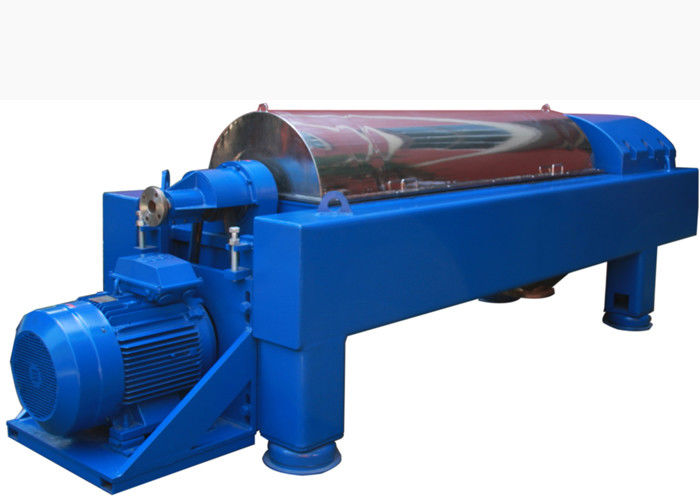
Water-Recovery Industrial Decanter Centrifuge for Abrasive Mineral

Brand Name: Peony
Model Number: PDC, PNX
MOQ: 1 set
Price: USD25000-100000/SET FOB Shanghai
Packaging Details: Standard wooden case
Payment Terms: TT,.LC,Western Union
Detail Information
Place of Origin:
China
Certification:
ISO
Application:
Drilling Mud, Oil Field
Operation:
Automatic Continuous
Conveyor:
Tiled With Hard Alloy
MOC:
SS
Motor:
Double
Bearing:
SKF, NSK As Optional
Control Box:
With
Solid Discharge:
360 Degree
Supply Ability:
60 sets per month
Highlight:

centrifuge wastewater treatment

,

drilling mud decanter centrifuge

Product Description
Water-Recovery Industrial Decanter Centrifuge for Abrasive Mineral
Water-Recovery Industrial Decanter Centrifuge for Abrasive Mineral 0
Description

Water-Recovery Industrial Decanter Centrifuge is designed for mining, sand washing, coal washing, mineral processing, and inorganic slurry projects where the main target is to recover clarified water from slurry and reduce the load on settling ponds or tailings ponds.

Unlike a wear-resistant decanter page that focuses mainly on machine protection and longer service life under abrasive slurry conditions, this page focuses on process water recovery, clarified liquid reuse, suspended solids reduction, tailings water management, and closed-loop water circulation.


Typical Mining and Mineral Slurry Applications
  • Sand washing process water recovery
  • Mineral washing water clarification
  • Coal washing process water reuse
  • Tailings water clarification
  • Mining process water recycling
  • Stone powder slurry water recovery
  • Kaolin process water clarification
  • Calcium carbonate slurry liquid recovery
  • Thickener overflow or underflow polishing
  • Closed-loop washing water circulation
  • Settling pond load reduction
  • Industrial slurry clarification before reuse

Why Water Recovery Matters in Mineral Slurry Treatment

Mining, sand washing, coal washing, and mineral processing systems often use a large amount of process water.

If slurry water is only discharged into settling ponds, the project may face several problems:

  • Large settling pond area
  • Slow natural sedimentation
  • High suspended solids in return water
  • Increased fresh water consumption
  • Unstable process water quality
  • Higher tailings water handling pressure
  • More frequent pond cleaning
  • Increased downstream filtration or wastewater treatment load

A decanter centrifuge helps recover clarified liquid from slurry more quickly than simple settling. This allows part of the water to return to the process and reduces the amount of slurry sent to ponds, tanks, or downstream treatment.


Key Water-Recovery Configuration Options
Configuration Item Available Options / Purpose
Bowl structure Heavy-duty solid bowl for abrasive mineral slurry
Screw conveyor Wear-protected conveyor for stable solids conveying
Screw flight protection Tungsten carbide tile, hard alloy, ceramic, or wear-resistant coating options
Feed zone protection Reinforced feed inlet to reduce impact wear
Solids discharge port Wear-resistant bushings or liners for abrasive cake discharge
Liquid outlet Designed for stable clarified water discharge
Differential speed control Helps balance cake dryness and solids conveying stability
Main drive system Selected according to slurry load and mineral solids content
Contact material Carbon steel, stainless steel, or customized material according to slurry condition
Wear liner Optional for high-abrasion slurry contact areas
Polymer dosing interface Optional when fine clay or ultra-fine particles need flocculation
Control system PLC / VFD control, torque monitoring, vibration alarm
Skid-mounted option Key Water-Recovery Configuration Options

How the Decanter Centrifuge Works in Mining Slurry
  1. Mining slurry enters the rotating bowl through the feed pipe.
  2. Under centrifugal force, heavier mineral particles move outward and form a dense sediment layer on the inner wall of the bowl.
  3. The clarified liquid phase stays closer to the center and is discharged continuously through the liquid outlet.
  4. At the same time, the screw conveyor rotates at a controlled differential speed and pushes the separated mineral solids toward the discharge end.
  5. The discharged mineral cake can be collected for stacking, backfilling, drying, transport, disposal, or further processing.

Water-Recovery Industrial Decanter Centrifuge for Abrasive Mineral 1

Technical Parameter
Model Diameter (mm) Length (mm) Length-to-diameter rate G force Max solid discharge (m³/h) Weight (kg) Dimension (L*W*H) (mm)
PDC-10 250 1000 4 4080 0.4 1000 2410*800*1080
PDC-12 4200 1350 4 3500 0.6 1200 2610*800*1080
PDC-12 4200 1350 4.5 3180 1.2 1800 3495*840*1180
PDC-18 4000 1600 4.5 3180 1.2 3200 3497*1020*1385
PDC-18 450 2150 4 2500 2 3800 4447*1080*1385
PDC-20 400 2250 4.5 2500 3.5 4000 4580*1140*1470
PDC-21 530 2280 4.3 2500 5 5000 4924*1170*1540
PDC-26 655 2800 4.3 2270 8 7000 4300*1900*1350

Main Advantages in Water Recovery Applications
Clarified Water Recovery

The centrifuge separates mineral solids from process water and helps recover clarified liquid for reuse in the production system.

Lower Suspended Solids in Return Water

By removing suspended particles, the system helps improve return water quality and reduce solids accumulation in the water circuit.

Reduced Settling Pond Load

Mechanical separation reduces the amount of slurry entering settling ponds, tailings ponds, or clarification basins.

Lower Fresh Water Demand

When recovered water can be reused, the project may reduce part of its fresh water consumption, depending on site water quality requirements.

More Stable Process Water Circulation

Stable clarified liquid discharge helps support more consistent washing, slurry preparation, or mineral processing operation.

Reduced Slurry Volume

The centrifuge separates part of the liquid phase from the slurry, reducing downstream slurry handling and storage load.

Suitable for Retrofit Projects

The system can be integrated with existing washing lines, thickening tanks, settling ponds, or process water circuits.

Expected Results

With proper feed control, suitable flocculation, stable operation, and a clear water-reuse target, this water-recovery industrial decanter centrifuge can typically help achieve:

  • 60–85% clarified water reuse rate, depending on water quality requirement
  • 70–90% suspended solids reduction, depending on particle size and feed condition
  • 80–95% solid capture rate, depending on flocculation and particle characteristics
  • 40–70% slurry volume reduction, depending on feed concentration
  • Lower load on settling ponds or tailings ponds
  • More stable return water quality
  • Reduced fresh water make-up demand in suitable projects
  • Reduced downstream filtration or wastewater treatment pressure
  • More manageable separated mineral solids for stacking, backfilling, drying, or disposal

Actual results depend on feed solids content, particle size distribution, clay content, flocculation effect, water quality target, feed stability, and downstream reuse requirements.

If ultra-clear water is required, downstream filtration, polishing, or additional treatment may still be needed.


What Data Is Needed for Selection?

To recommend a suitable mining slurry industrial decanter centrifuge, please provide:

  • Feed material name
  • Mine type or mineral type
  • Capacity requirement, in m³/h or tons/day
  • Feed solids content
  • Particle size distribution
  • Particle hardness or mineral composition
  • Clay content or fine particle content
  • Slurry density
  • Viscosity, if available
  • Abrasion condition
  • Current pretreatment, such as screening, thickening, or grit removal
  • Polymer dosing condition, if any
  • Target cake moisture
  • Target clarified water reuse rate
  • Target suspended solids in separated water
  • Whether the separated solids need stacking, backfilling, drying, or disposal
  • Required operating hours per day
  • Wear protection requirement
  • Site voltage and control preference
  • Need for skid-mounted system or not

For mining slurry projects, particle hardness, particle size, clay content, abrasion level, and target water reuse requirement are especially important before model selection.


FAQ
What is a water-recovery industrial decanter centrifuge?

It is a decanter centrifuge used to separate suspended mineral solids from slurry water and recover clarified liquid for reuse in washing, mineral processing, slurry preparation, or process water circulation systems.

How is it different from a wear-resistant decanter centrifuge?

A wear-resistant decanter centrifuge focuses on protecting the machine against abrasive slurry and extending the service life of contact parts. A water-recovery decanter centrifuge focuses on clarified water recovery, lower suspended solids, process water reuse, and reduced settling pond load.

Can the recovered water be reused directly?

It depends on the required water quality. In many washing or mineral processing projects, recovered water can return to the process. If the process requires very low suspended solids, additional filtration or polishing may be needed.

Is polymer dosing required?

It depends on particle size and clay content. If the slurry contains fine clay or ultra-fine suspended solids, polymer dosing can improve solid capture and clarified water quality. If particles settle easily, dosing may be reduced or not required.

Can this machine replace a settling pond?

It can reduce the load on settling ponds and improve water recovery efficiency, but whether it can replace a pond depends on capacity, water quality target, site layout, and downstream process requirements.


Contact Peony for Partnership

If you have local customer channels or project resources involving mining tailings, coal washing wastewater, sand washing wastewater, stone powder slurry, kaolin slurry, calcium carbonate slurry, mineral processing slurry, or inorganic powder slurry treatment, Peony welcomes cooperation.

Peony can support local agents, distributors, and project partners with technical model selection, wear-resistant configuration recommendation, process proposal, skid-mounted system integration, equipment manufacturing, installation guidance, commissioning support, spare parts, and after-sales service.

Please send us your target market, customer type, project background, and cooperation proposal. Our team will evaluate the opportunity and provide technical and commercial support for suitable mining slurry separation projects.