logo
Good price  online

products details

Home > Products >
Industrial Centrifuge Solution
>
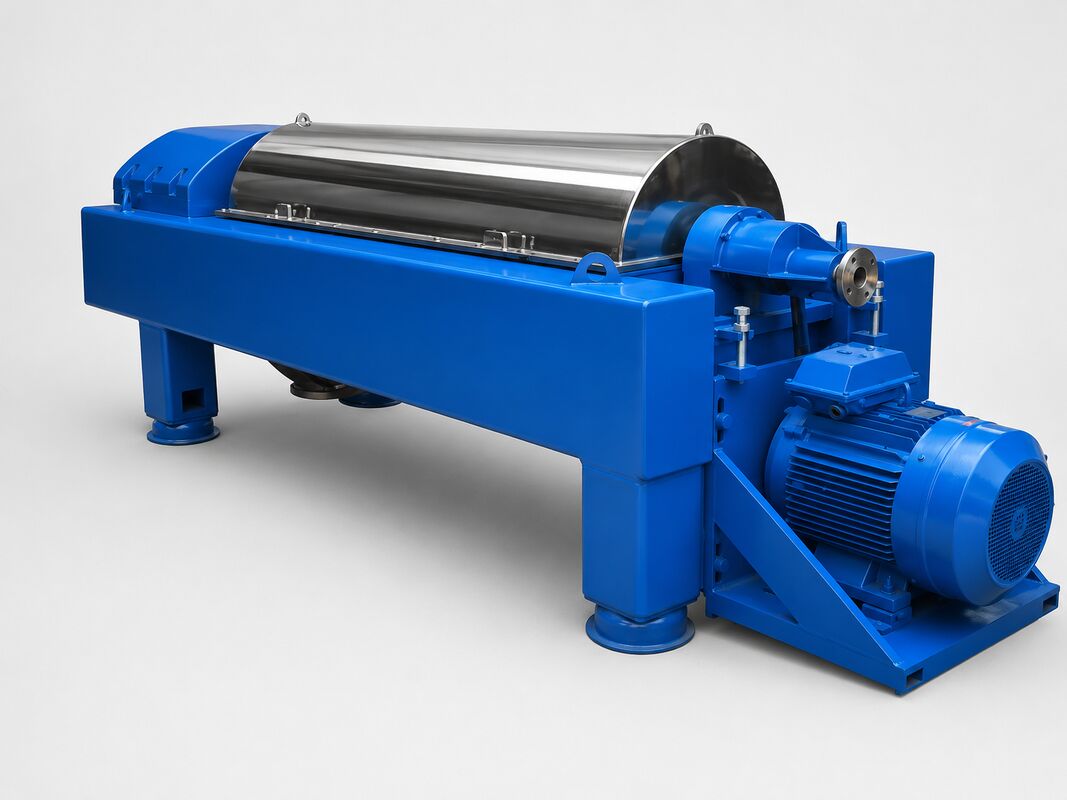
Fine Chemical Industry Decanter Centrifuge

Fine Chemical Industry Decanter Centrifuge

Brand Name: Peony
Model Number: LW
MOQ: 1 set
Price: please contact me
Packaging Details: Standard wooden case
Payment Terms: L/C,T/T,Western Union
Detail Information
Place of Origin:
China
Certification:
ISO,CE, ISO
Type:
Solid Liquid Decanter Centrifuge Separator
Application:
In Fine Chemical Industry
Motor:
Plant Motor
Discharge Type:
Automatically
Capacity:
0.5-120 Cubic Meters/hr Based On Material
Electrical Control Cabinet:
PLC Control Panel/frequency Control Panel
Supply Ability:
100sets per month
Highlight:

CE solid liquid centrifugal separator

,

120m3/h solid liquid centrifugal separator

,

1500RPM centrifugal solids separator

Product Description
Fine Chemical Industry Decanter Centrifuge
Fine Chemical Industry Decanter Centrifuge 0
Description

In fine chemical production, many process streams contain fine particles, corrosive liquids, organic solvents, salts, catalysts, pigments, polymers, or reaction residues. These materials often require stable solid-liquid separation before drying, wastewater treatment, solvent recovery, mother liquor recycling, or further purification.

A decanter centrifuge is used for continuous separation of fine chemical slurry. Under centrifugal force, heavier solid particles settle on the bowl wall, while the clarified liquid forms an inner liquid layer. The screw conveyor moves the settled solids toward the discharge end and discharges them continuously.

Compared with simple sedimentation or batch filtration, a decanter centrifuge is more suitable for continuous production lines, high-throughput slurry treatment, enclosed operation, and automatic solids discharge.

For fine chemical plants, the key is not only capacity. More important factors include particle size, solids content, viscosity, corrosiveness, solvent compatibility, target cake moisture, clarified liquid quality, explosion-proof requirements, and material selection.


Typical Applications
Application Typical Material Separation Purpose
Fine chemical reaction slurry Solid catalyst, reaction residue, salt crystals Solid-liquid separation
Catalyst slurry Fine catalyst particles and mother liquor Catalyst recovery or liquid clarification
Pigment and dye slurry Fine pigments, dye intermediates, process liquid Solids recovery and liquid clarification
Resin and polymer wastewater Polymer particles, suspended solids, viscous liquid Solids removal and wastewater load reduction
Acidic or alkaline process slurry Corrosive liquid with fine solids Continuous dewatering under harsh conditions
Mother liquor treatment Crystalline solids and process mother liquor Mother liquor recovery and solids discharge
Solvent-containing slurry Organic solvent and suspended solids Enclosed separation and solvent recovery support
Chemical wastewater sludge Inorganic sludge, reaction residue, high-salt sludge Sludge dewatering and volume reduction

Process Position in Fine Chemical Production

A decanter centrifuge can be installed in different positions depending on the process route.

Typical process routes include:

Reaction → Cooling / Crystallization → Decanter centrifuge → Wet cake discharge → Drying or packaging

Reaction slurry → Decanter centrifuge → Clarified liquid recovery → Solids discharge

Process wastewater → Chemical conditioning → Decanter centrifuge → Sludge cake discharge → Filtrate return or further treatment

Solvent-containing slurry → Closed decanter separation → Liquid recovery → Solids handling

In some fine chemical projects, the decanter centrifuge is used as a pre-separation unit before filter press, dryer, evaporator, solvent recovery system, or wastewater treatment system.


How the Decanter Centrifuge Works in Fine Chemical Industry

The feed slurry enters the rotating bowl through the feed pipe. Under high centrifugal force, solid particles move outward and settle on the inner wall of the bowl.

The clarified liquid forms an inner layer and flows toward the liquid outlet. The screw conveyor rotates at a slightly different speed from the bowl and continuously conveys settled solids toward the conical section. The solids are discharged through the solids outlet.

Fine Chemical Industry Decanter Centrifuge 1


Key Selection Factors

1. Particle Size and Settling Behavior

Fine chemical slurries often contain fine particles or irregular solids. If particles are too fine or have poor settling behavior, separation may require higher centrifugal force, longer residence time, or upstream conditioning.

For very fine particles, a decanter centrifuge should be selected based on actual material testing rather than only theoretical capacity.

2. Solids Content and Feed Stability

Low-solids slurry and high-solids slurry require different bowl structures and operating settings.

Low-solids slurry usually focuses on liquid clarification and solids recovery. High-solids slurry requires stronger torque capacity, stable screw conveying, and reliable solids discharge.

3. Corrosion Resistance

Fine chemical streams may contain acids, alkalis, salts, solvents, or other corrosive components. Material selection is critical.

Common options include:

SS304
SS316L
Duplex stainless steel
904L
Titanium
Hastelloy or other special alloy options

The final material should be selected based on pH value, chloride content, solvent type, temperature, and corrosion testing.

4. Wear Protection

If the slurry contains abrasive crystals, catalyst particles, inorganic salts, pigments, or mineral fillers, wear protection should be considered.

Typical protection options include:

hardfacing
tungsten carbide tiles
ceramic protection
wear-resistant discharge ports
reinforced screw conveyor flights

Wear protection is especially important for continuous 24/7 chemical production.

5. Enclosed and Explosion-Proof Design

Some fine chemical processes contain organic solvents or volatile liquids. In these cases, the centrifuge may require enclosed operation, nitrogen protection, vapor collection, grounding, sealing design, and explosion-proof electrical components.

The configuration depends on the solvent type, flash point, site safety requirements, and local regulations.

6. Target Cake Moisture and Liquid Clarity

Lower cake moisture can reduce drying load, but may require higher speed, lower differential speed, longer residence time, or better feed conditioning.

Higher liquid clarity may require optimized pond depth, feed stability, and particle settling behavior.


Technical Parameter
Model Diameter (mm) Length (mm) Length-to-diameter rate G force Max solid discharge (m³/h) Weight (kg) Dimension (L*W*H) (mm)
PDC-10 250 1000 4 4080 0.4 1000 2410*800*1080
PDC-12 4200 1350 4 3500 0.6 1200 2610*800*1080
PDC-12 4200 1350 4.5 3180 1.2 1800 3495*840*1180
PDC-18 4000 1600 4.5 3180 1.2 3200 3497*1020*1385
PDC-18 450 2150 4 2500 2 3800 4447*1080*1385
PDC-20 400 2250 4.5 2500 3.5 4000 4580*1140*1470
PDC-21 530 2280 4.3 2500 5 5000 4924*1170*1540
PDC-26 655 2800 4.3 2270 8 7000 4300*1900*1350

Recommended Equipment Configuration
Configuration Function
High-speed bowl design Improves separation force for fine particles
Adjustable differential speed Balances cake moisture and discharge stability
Corrosion-resistant wetted parts Suitable for acidic, alkaline, or salt-containing slurry
Wear-resistant screw conveyor Handles abrasive crystals, catalysts, or pigments
Enclosed structure Reduces leakage, odor, and solvent vapor exposure
Explosion-proof motor and control system Suitable for solvent-containing chemical processes
Nitrogen protection option Supports safer operation for volatile or oxygen-sensitive materials
PLC control system Supports continuous automatic operation
Torque and vibration monitoring Protects equipment under fluctuating feed conditions
CIP or flushing interface Reduces material buildup and cleaning time

Main Advantages Fine Chemical Industry

Continuous solid-liquid separation
Suitable for continuous fine chemical production lines, reducing manual batch handling.

Typical processing capacity
Available for small and large chemical plants, with typical capacity from about 1–50 m³/h, depending on slurry properties and machine model.

Improved solids recovery
Helps recover catalysts, pigments, crystals, or reaction residues from process liquid.

Reduced downstream drying load
Stable wet cake discharge can help reduce load on dryers or further dewatering equipment.

Support for mother liquor recovery
Clarified liquid or mother liquor can be returned, treated, or sent to downstream recovery systems depending on process requirements.

Corrosion-resistant material options
SS316L, duplex stainless steel, 904L, titanium, or special alloys can be selected according to chemical conditions.

Wear-resistant design for abrasive slurry
Hardfacing, tungsten carbide, ceramic protection, and reinforced discharge areas are available for crystal or catalyst slurry.

Enclosed and automatic operation
PLC control, continuous feeding, automatic discharge, and sealed structure help improve operational stability and reduce manual intervention.

Explosion-proof options available
For solvent-containing slurry, explosion-proof motor, electrical control, sealing, grounding, and nitrogen protection can be configured.


What Data Is Needed for Selection?

Please provide:

Material name
Feed flow rate
Solids content
Particle size distribution
Liquid phase composition
pH value
Chloride content
Solvent type, if any
Operating temperature
Viscosity
Target cake moisture
Required liquid clarity
Corrosion and abrasion conditions
Explosion-proof or nitrogen protection requirement
Operating hours per day


FAQ

Can a decanter centrifuge be used for fine chemical slurry?

Yes. It can be used for many fine chemical slurries, including catalyst slurry, pigment slurry, reaction residue slurry, mother liquor slurry, and chemical wastewater sludge. Suitability depends on particle size, solids content, viscosity, and density difference.

What materials are available for corrosive chemical slurry?

Common options include SS304, SS316L, duplex stainless steel, 904L, titanium, and special alloys. The final selection depends on pH, chloride content, solvent type, temperature, and corrosion level.

Can the centrifuge handle solvent-containing materials?

Yes, but the equipment may require enclosed design, explosion-proof motor and control system, grounding, sealing, vapor collection, or nitrogen protection. The configuration depends on solvent properties and site safety requirements.

What affects the separation result?

The result is affected by particle size, solids content, density difference, viscosity, temperature, bowl speed, differential speed, pond depth, and scroll design.

What information is needed for selection?

Please provide feed capacity, solids content, particle size, liquid composition, pH, temperature, viscosity, target cake moisture, required liquid clarity, corrosion conditions, and explosion-proof requirements.


Contact Peony for Partnership

If you have local customer channels or project resources involving fine chemical slurry, catalyst slurry, pigment slurry, dye intermediates, resin wastewater, acidic process slurry, alkaline process slurry, corrosive mother liquor, solvent-containing slurry, or chemical wastewater sludge, Peony welcomes cooperation.

Peony can support local agents, distributors, and project partners with technical model selection, fine chemical slurry separation evaluation, anti-corrosion material recommendation, wear-protection configuration, explosion-proof design, process proposal, manufacturing, installation guidance, commissioning support, spare parts, and after-sales service.

Please send us your target market, customer type, material condition, project background, and cooperation proposal. Our team will evaluate the opportunity and provide technical and commercial support for suitable fine chemical separation projects.